
Introduction
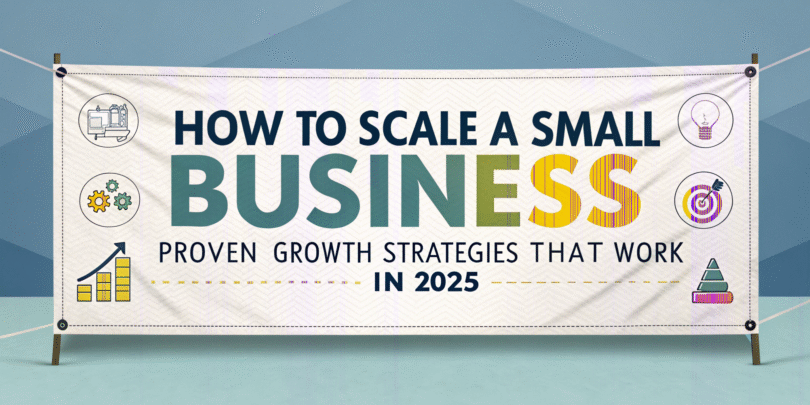
Starting a business is an achievement—but scaling a small business is where real growth and long-term success happen. Many entrepreneurs struggle at this stage because scaling requires a different mindset, systems, and strategies than launching. Without proper planning, growth can actually harm your business instead of helping it.
In 2025, businesses have more opportunities to scale than ever before, thanks to digital tools, automation, and global markets. Whether you’re running an online brand, service business, or local company, learning how to scale the right way can increase revenue without burning out or losing quality. This guide covers proven growth strategies, real-world examples, common mistakes, and practical steps to scale your small business sustainably.
What Does It Mean to Scale a Small Business?
Scaling means increasing revenue without increasing costs at the same rate.
Scaling vs Growth
Growth: Revenue increases with costs
Scaling: Revenue increases faster than costs
Scaling focuses on efficiency and systems.
When Is the Right Time to Scale?
Not every business is ready to scale.
Signs You’re Ready
Consistent sales
Repeat customers
Proven demand
Stable cash flow
Mini Case Study
A service agency focused on refining processes before hiring. This allowed them to scale without sacrificing quality.
Step-by-Step Strategies to Scale a Small Business
1. Strengthen Your Core Offering
Before scaling, ensure your product or service is solid.
Focus On:
Customer satisfaction
Clear value proposition
Competitive advantage
2. Systemize Business Processes
Systems reduce dependency on you.
Examples:
Standard operating procedures (SOPs)
Automated workflows
Templates and tools
Systems make scaling possible.
3. Build the Right Team
You can’t scale alone.
Hiring Tips:
Hire for skills and attitude
Outsource non-core tasks
Train consistently
4. Use Automation & Technology
Automation saves time and money.
Tools For:
Marketing automation
Customer support
Accounting
Technology enables smart scaling.
5. Expand Your Marketing Channels
Don’t rely on a single traffic source.
Scaling Channels:
Content marketing
Paid advertising
Email marketing
Partnerships
Test and optimize continuously.
6. Improve Customer Retention
Retention is cheaper than acquisition.
Retention Strategies:
Loyalty programs
Excellent support
Personalized communication
7. Optimize Pricing & Offers
Small pricing changes can significantly increase profit.
Strategies:
Bundling
Upselling
Subscription models
8. Expand to New Markets
Once stable, explore new markets.
Options:
New locations
Online expansion
International customers
Scaling Strategies for Different Business Types
Service-Based Businesses
Productize services
Retainer models
Product-Based Businesses
Bulk production
Distribution partnerships
Online Businesses
Digital products
Global marketing
Common Mistakes When Scaling a Business
Scaling too early
Ignoring cash flow
Hiring too fast
Poor customer support
No systems in place
Sustainable scaling beats fast scaling.
How to Manage Risks While Scaling
Monitor finances regularly
Track key performance indicators (KPIs)
Maintain quality control
Listen to customer feedback
FAQs
Q1: What is the best way to scale a small business?
Focus on systems, team, and customer retention.
Q2: Can small businesses scale without big investment?
Yes, through automation and digital strategies.
Q3: How long does scaling take?
Scaling is ongoing, not a one-time phase.
Q4: Is scaling risky?
Yes, but risks can be managed with planning.
Q5: Should I scale online or offline first?
Online scaling is usually faster and cheaper.
Q6: What happens if scaling fails?
Learn, adjust, and re-optimize strategies.
Internal Link
How to Start a Small Business From Scratch
How to Validate a Business Idea Before You Start
Entrepreneur Mindset: Skills & Habits
External Links
Harvard Business Review – Business Growth
Investopedia – Scaling a Business
Entrepreneur.com